The Hack
Give all cats and/or dogs flea medication in the form of a pill. These are often must be prescribed by a vet. Within an hour, fleas which bite the medicated pet will die. Different treatments will stay in the pets system for different lengths of time, ranging from as short as 24 hours to as long as a month.
These treatments will kill nearly all fleas living on the pet, and since they are safe to consume, they are less risky than collar or topical medication (especially cats which are astonishingly good at cleaning every square inch of their bodies, even the back of their necks).
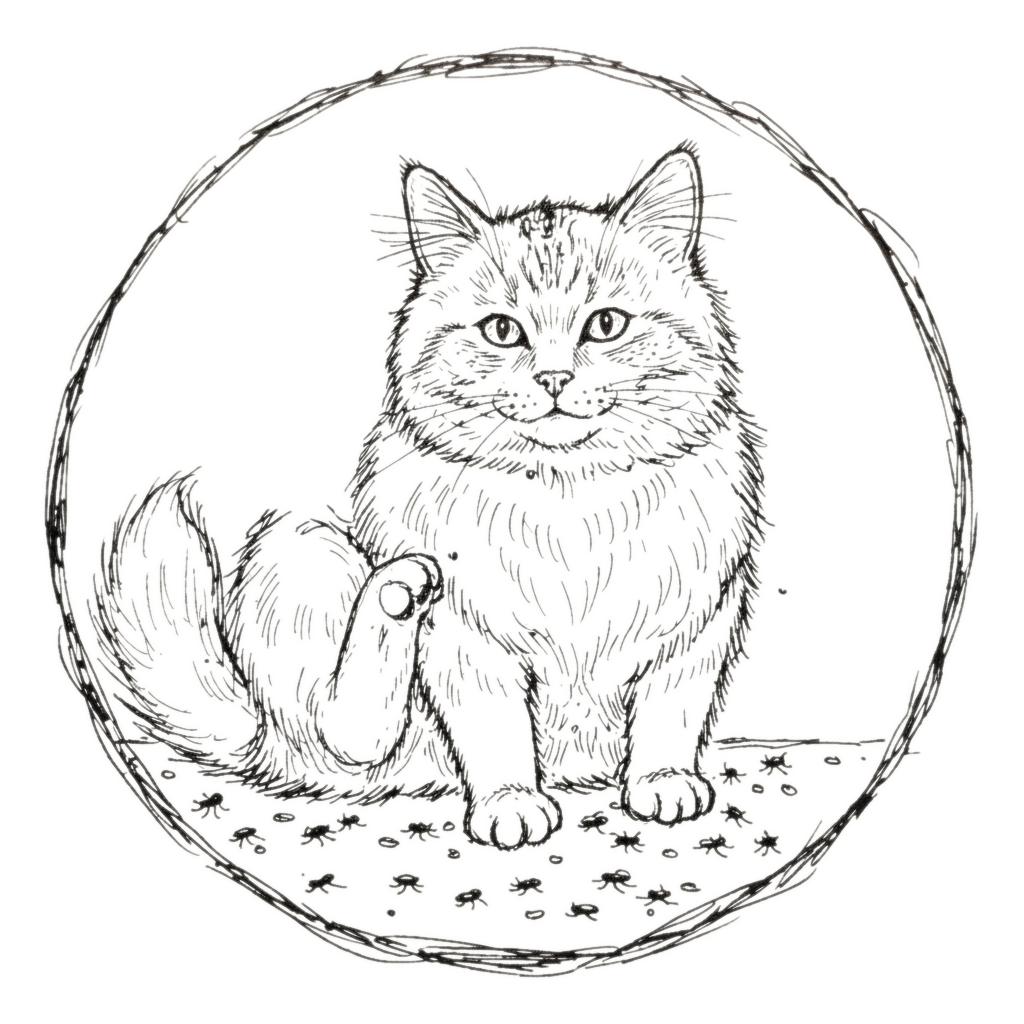
Fleas are drawn to pets (especially cats) significantly more than to humans, so in a way, a medicated cat is the perfect flea killing treatment.
Over time the majority of larvae and pupae will make their way into the adult stage and be drawn to the cat where they will die soon after the first time they bite your pet. In a controlled environment this can collapse the entire flea population to near zero and quickly kill off any stragglers that may emerge.
This is also an effective "maintenance" treatment for animals which may be regularly exposed to fleas, e.g. outside, to prevent them carrying fleas to a new location and creating an infestation.
These treatments will kill nearly all fleas living on the pet, and since they are safe to consume, they are less risky than collar or topical medication (especially cats which are astonishingly good at cleaning every square inch of their bodies, even the back of their necks).
Fleas are drawn to pets (especially cats) significantly more than to humans, so in a way, a medicated cat is the perfect flea killing treatment.
- Cats sleep in areas most likely to already be infested by larvae and pupae.
- Cats create the perfect warmth, movement, vibration, and other stimuli to hatch pupae cocoons.
- Cats draw any adult fleas out of hiding (or directly after hatching) and potentially even off of a less-preferred human host.
Over time the majority of larvae and pupae will make their way into the adult stage and be drawn to the cat where they will die soon after the first time they bite your pet. In a controlled environment this can collapse the entire flea population to near zero and quickly kill off any stragglers that may emerge.
This is also an effective "maintenance" treatment for animals which may be regularly exposed to fleas, e.g. outside, to prevent them carrying fleas to a new location and creating an infestation.
Limitations
Only adult fleas are targeted with this method. This means that to fully eliminate an infestation it may require some time.
The fleas only die when the pet is bit. This does stop the same flea flea from biting your cat more than once, and the fleas that die are unable to produce offspring which could bite your pet, so this does ultimately reduce the number of bites that your dog or cat receives. However it still does require your pet to be bitten by the flea in order to have any effect.
Every animal in the household should be treated as even a single untreated animal can keep a flea population alive.
The fleas only die when the pet is bit. This does stop the same flea flea from biting your cat more than once, and the fleas that die are unable to produce offspring which could bite your pet, so this does ultimately reduce the number of bites that your dog or cat receives. However it still does require your pet to be bitten by the flea in order to have any effect.
Every animal in the household should be treated as even a single untreated animal can keep a flea population alive.
Administering the pills
Cats are particularly difficult to get to eat pills. It can be hard to get them to scarf down a pill hidden in something else, especially because the medication often makes them sick so they develop a strong sensitivity and dislike for the scent of the medication.
You may find that you have to physically hold your cat's mouth open with your hands and drop the pill into the back of their throat, forcing them to swallow. This is prone to go wrong in a number of ways and could even result in injury, depending on the temperament of your cat.
You may find that you have to physically hold your cat's mouth open with your hands and drop the pill into the back of their throat, forcing them to swallow. This is prone to go wrong in a number of ways and could even result in injury, depending on the temperament of your cat.
Health Concerns
Most oral flea medications are prescription for a reason: they come with a variety of risks, health concerns, and potential side effects. The requirement for a a veterinarian to evaluate your pet to make sure the medication is safe shows that these medications are potentially dangerous but also can be safe when administered properly. Watch your pet carefully and keep in touch with your vet.
Still, these are generally safer than topical medication which are not ever intended to be ingested.
Still, these are generally safer than topical medication which are not ever intended to be ingested.