The Hack
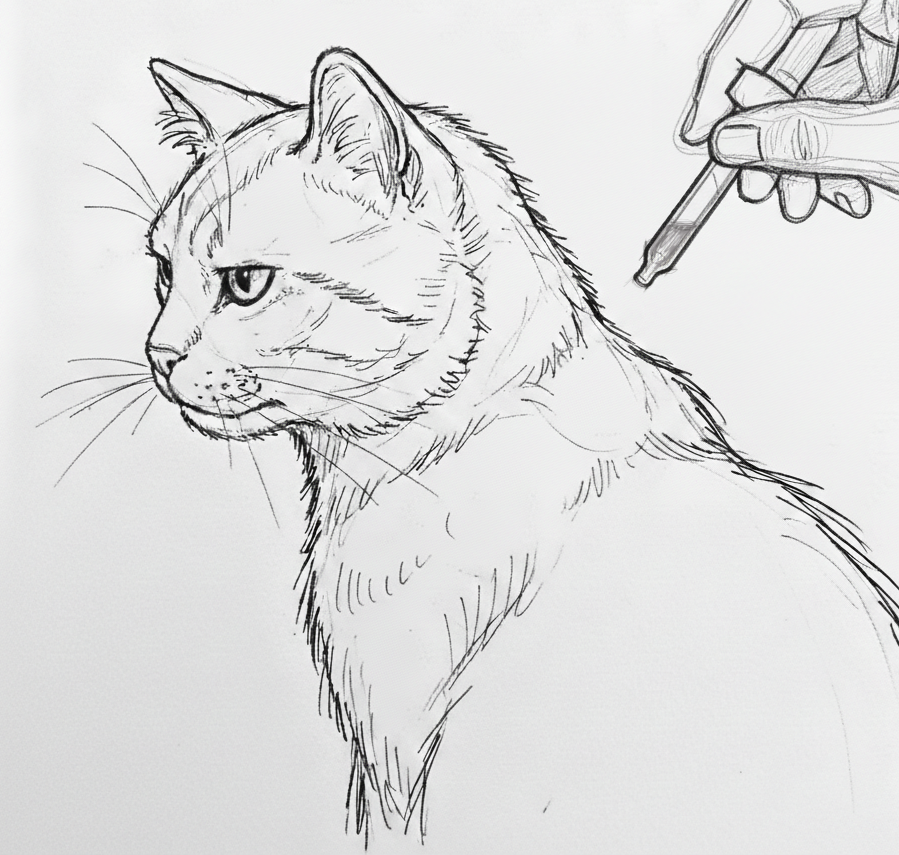
Treat all your pets with a topical medication, usually monthly. This medication is usually applied to the skin at the back of the neck to prevent the pet from ingesting it. Any adult fleas that come in contact with the poison will die, but some medications also have growth inhibitors to stop eggs from hatching or repellants.
Even though it's applied to the back of the neck, the poison dissolves into the natural oil of the animal spreads across the pet's whole body. Fleas are killed by contact with the poison mixed with sebaceous oil, not by biting your pet, though the medication doesn't necessarily prevent them from also biting.
Within a day or two, when the poison has had a chance to translocate over the whole body and fleas have had a chance to come in contact with it, all of the fleas on the animal will die.
In an infestation, most fleas are in the house (e.g. bedding, carpets, etc) not on the pet, however, the vast majority of fleas will find their way onto the cat and die, given enough time. This is because:
In this way, even though topical flea treatment is primarily an adulticide, it will eventually kill eggs, larvae and pupae after they hatch and find their way on to your pet, where they will die and end the cycle.
Even though it's applied to the back of the neck, the poison dissolves into the natural oil of the animal spreads across the pet's whole body. Fleas are killed by contact with the poison mixed with sebaceous oil, not by biting your pet, though the medication doesn't necessarily prevent them from also biting.
Within a day or two, when the poison has had a chance to translocate over the whole body and fleas have had a chance to come in contact with it, all of the fleas on the animal will die.
In an infestation, most fleas are in the house (e.g. bedding, carpets, etc) not on the pet, however, the vast majority of fleas will find their way onto the cat and die, given enough time. This is because:
- Cats sleep in areas most likely to already be infested by larvae and pupae.
- Cats create the perfect warmth, movement, vibration, and other stimuli to hatch pupae cocoons.
- Cats draw any adult fleas out of hiding (or directly after hatching) and potentially even off of a less-preferred human host.
In this way, even though topical flea treatment is primarily an adulticide, it will eventually kill eggs, larvae and pupae after they hatch and find their way on to your pet, where they will die and end the cycle.
Limitations
Typically, only adult fleas are targeted with this method. This means that to fully eliminate an infestation it may require some time.
If the medication is applied improperly, e.g. in the fur and not all the way down to the skin, it may not be properly absorbed and translocated throughout the pet's skin.
Cats are able to reach astonishingly far around towards the back of their neck, both with direct licking and by "combing," a process where the cat licks their paw and then combs the paw across difficult to reach areas like the head, face, and back of neck. This means that it's possible for cats to ingest the medication, especially if the application of the medication was sloppy or the medication was spread around before having a chance to fully absorb into the skin.
Ingesting the poison is bad for the cat and reduces the effectiveness of the treatment.
The medication wears off and must be re-applied regularly, usually monthly.
Every animal in the household should be treated as even a single untreated animal can keep a flea population alive.
If the medication is applied improperly, e.g. in the fur and not all the way down to the skin, it may not be properly absorbed and translocated throughout the pet's skin.
Cats are able to reach astonishingly far around towards the back of their neck, both with direct licking and by "combing," a process where the cat licks their paw and then combs the paw across difficult to reach areas like the head, face, and back of neck. This means that it's possible for cats to ingest the medication, especially if the application of the medication was sloppy or the medication was spread around before having a chance to fully absorb into the skin.
Ingesting the poison is bad for the cat and reduces the effectiveness of the treatment.
The medication wears off and must be re-applied regularly, usually monthly.
Every animal in the household should be treated as even a single untreated animal can keep a flea population alive.
Health Concerns
Dangers to Pets
The medication must be applied cleanly and precisely, and not disturbed until it has had a chance to absorb, otherwise it can end up in a place where the pet can reach it.
Even perfectly applied medication can be consumed by cats, since they clean hard to reach places by licking their paw and then combing it over their heads repeatedly.
Pets may also groom each other and ingest the poison that way. This is a particular concern if a cat licks a dog since dog treatments often contain permethrin, which is highly toxic to cats, potentially fatal within hours.
Topical poisons are designed to minimize danger if ingested (which is exactly why cats topical meds never contain permethrin) but they are not intended for consumption and can cause issues. Watch your pet carefully for any of the following signs following treatment:
Milder concern
Serious concern
Even perfectly applied medication can be consumed by cats, since they clean hard to reach places by licking their paw and then combing it over their heads repeatedly.
Pets may also groom each other and ingest the poison that way. This is a particular concern if a cat licks a dog since dog treatments often contain permethrin, which is highly toxic to cats, potentially fatal within hours.
Topical poisons are designed to minimize danger if ingested (which is exactly why cats topical meds never contain permethrin) but they are not intended for consumption and can cause issues. Watch your pet carefully for any of the following signs following treatment:
Milder concern
- Hypersalivation (foamy or frothy saliva)
- Pawing at the mouth, shaking the head or trying to "wipe" the taste away
- Vomiting
Serious concern
- Persistent vomiting
- Lack of appetite
- Diarrhea
- Muscle tremors
- Dilated pupils
- Drunken walking (ataxia)
- Extreme agitation
- Unusual hiding
- Unusual vocalization
- Seizures
- Hypothermia
Dangers to Humans
Adults
There is no question that adults are cross contaminated with flea medication. One study found that pet owners hands are contaminated for at least 28 days after applying a single dose. (They didn't test beyond 28 days to the effects are likely even longer.)
Topical medications are extremely potent neurotoxic insecticides with a range of potential health effects. The dangers depend on exactly which chemical is used, but can include:
Most of the issues are cumulative risks, rather than acute. A single exposure is very unlikely to cause cancer, but over the long term, continual exposure increases the risk.
Contamination happens through the application process and continues by petting or touching the animal in the ensuring month after treatment, so unless you're not going to touch your pet at all, there's no way to completely eliminate risk.
Dangers can be reduced by wearing gloves when applying the topical treatment, and being extremely careful not to touch your eye or cook food after petting your dog or cat.
Freshwater Contamination
Contaminated skin isn't only bad for the pet owner, unfortunately. For those 28+ days that you are contaminated, every time you wash your hands some of the insecticide is washed into the sewer and is not effectively removed by treatment plants. A study on two common spot-on treatment chemicals found "fipronil was detected in 98% of freshwater samples, and imidacloprid in 66%."
Children
Kids literally have thinner skin. They also spend more time on the ground and are more likely to explore their world (and their pets) with their mouths, or to put their fingers in their mouths or eyes after touching a pet. This makes children even more sensitive to all of the health effects on adults.
Even more concerning, topical flea medications were found to cause developmental delay in children whose mothers were exposed during pregnancy.
There is no question that adults are cross contaminated with flea medication. One study found that pet owners hands are contaminated for at least 28 days after applying a single dose. (They didn't test beyond 28 days to the effects are likely even longer.)
Topical medications are extremely potent neurotoxic insecticides with a range of potential health effects. The dangers depend on exactly which chemical is used, but can include:
- Thyroid Interference
- Cancer
- Liver and Kidney stress
- Chemical conjunctivitis or corneal irritation
- Paresthesia
- Contact Dermatitis
Most of the issues are cumulative risks, rather than acute. A single exposure is very unlikely to cause cancer, but over the long term, continual exposure increases the risk.
Contamination happens through the application process and continues by petting or touching the animal in the ensuring month after treatment, so unless you're not going to touch your pet at all, there's no way to completely eliminate risk.
Dangers can be reduced by wearing gloves when applying the topical treatment, and being extremely careful not to touch your eye or cook food after petting your dog or cat.
Freshwater Contamination
Contaminated skin isn't only bad for the pet owner, unfortunately. For those 28+ days that you are contaminated, every time you wash your hands some of the insecticide is washed into the sewer and is not effectively removed by treatment plants. A study on two common spot-on treatment chemicals found "fipronil was detected in 98% of freshwater samples, and imidacloprid in 66%."
"Highly toxic pesticides used in the flea products are then flowing down household drains when pet owners wash their hands. Wastewater from sewage treatment works is a major source of fipronil and imidacloprid pollution in rivers – with concentrations in rivers exceeding safe limits for wildlife."
-University of Sussex
Children
Kids literally have thinner skin. They also spend more time on the ground and are more likely to explore their world (and their pets) with their mouths, or to put their fingers in their mouths or eyes after touching a pet. This makes children even more sensitive to all of the health effects on adults.
Even more concerning, topical flea medications were found to cause developmental delay in children whose mothers were exposed during pregnancy.